About Course
Keep accurate, HMRC-ready records for your business: learn double-entry bookkeeping, invoices, bank reconciliation and VAT basics, step by step.
Who it’s for
Sole traders, new business owners, admin staff and career-changers who want to keep their own books or start a career in bookkeeping.
What you’ll be able to do
- Explain your legal record-keeping duties to HMRC and Companies House
- Use key terms: assets, liabilities, income, expenses and equity
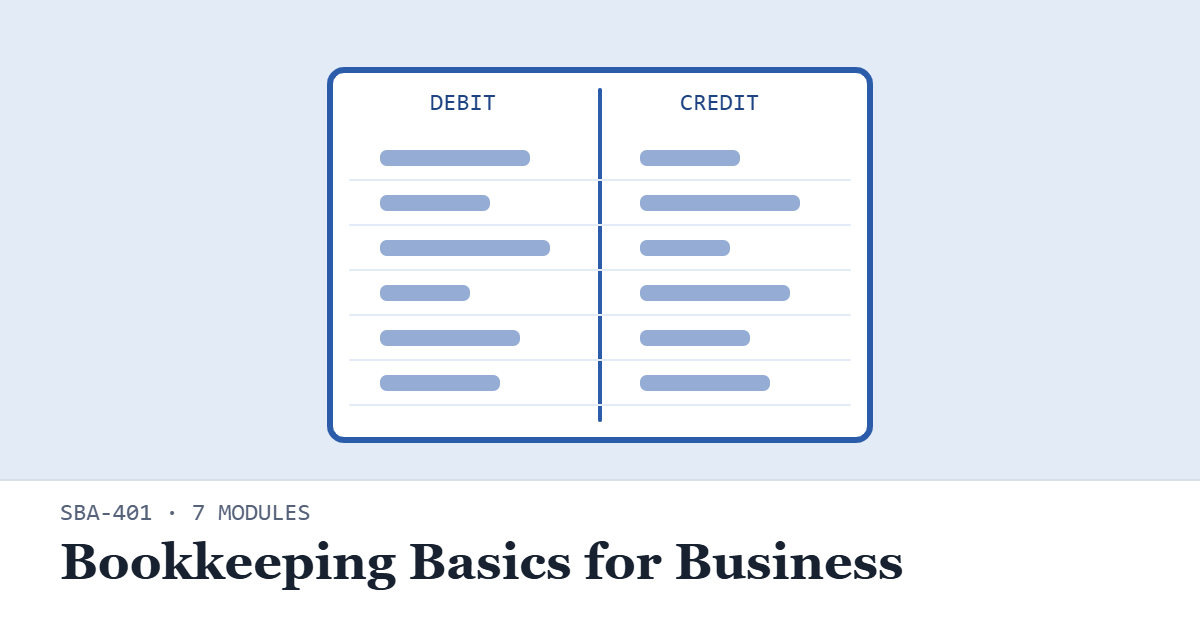
- Record transactions using double-entry bookkeeping
- Handle sales and purchase invoices, receipts and petty cash
- Reconcile the bank account step by step
- Understand VAT registration, rates and returns
- Run a simple monthly bookkeeping routine and trial balance
What’s included
- 7 in-depth modules, each with a structured lesson
- 7 module quizzes to check your understanding
- Worked examples and a practical exercise in every module
- About 30 hours of study, at your own pace
- Lifetime access, on any device
- Certificate of completion
How you study
Each module combines a structured lesson with a worked example, a practical exercise and key takeaways, followed by a short quiz. You need 70% to pass each quiz and can retake it as often as you like. Complete every module to finish the course.
Course Content
Why bookkeeping matters
-
Why bookkeeping matters
-
Module check: Why bookkeeping matters